How to Turn Anonymous Foot Traffic Into a Marketing Database
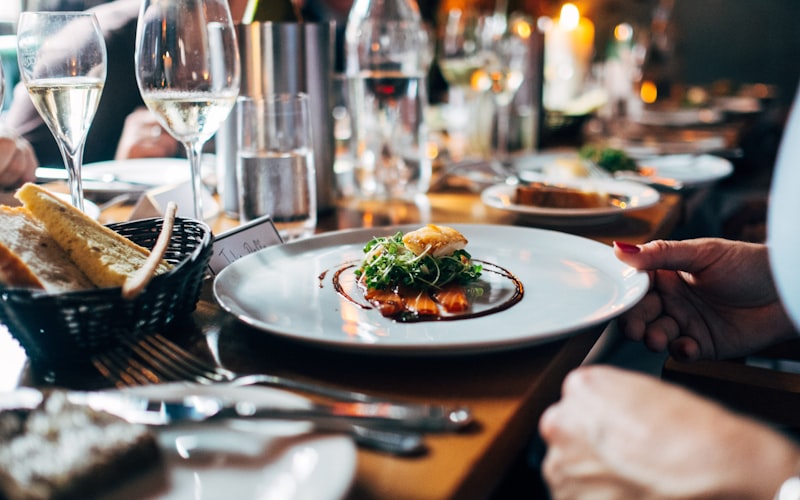
Walk into any restaurant, café, hotel lobby, or retail store on a typical Saturday afternoon and you'll find dozens - sometimes hundreds - of customers handing over money. By Sunday morning, the venue knows almost nothing about them. No name. No email. No way to invite them back. No way to thank them. No way to ask for a Google review.
This is what we call anonymous foot traffic: the 95–99% of in-person visitors who leave with their wallet £30 lighter and your venue with zero ability to ever reach them again.
It's the largest unsolved marketing problem in hospitality and retail - and one of the easiest to fix. This guide tells you exactly how.
The anonymous-guest problem, in numbers
Most venue operators dramatically underestimate how few of their visitors they actually capture. Here's a typical breakdown for an independent restaurant or café:
| Channel | Visitors captured (typical) | % of total |
|---|---|---|
| Online bookings (OpenTable, ResDiary) | ~15 | ~5% |
| Email signup at till / on receipt | ~3 | ~1% |
| Loyalty card sign-ups | ~2 | ~0.7% |
| Social media follows from in-venue | ~1 | ~0.3% |
| Anonymous (everyone else) | ~280 | ~93% |
| Total daily visitors | ~301 | 100% |
That 93% figure is conservative. For most cafés and pubs without a dedicated reservation flow, it's closer to 99%.
Now zoom out for a year. A 200-cover restaurant serving 30,000 customers annually currently captures contact details for around 1,500 of them and leaves 28,500 unreachable. At a conservative £20 of incremental revenue per email per year - through repeat visits, birthday offers, and event promotions - that's £570,000 of revenue left on the table.
This isn't a hypothetical. Beambox reviewers describe it in their own words on G2:
"Beambox solves the Anonymous Guest problem... automatically at scale." - Ellie N., Content Strategist
"Beambox gives us a direct line to the actual people interacting with our clients' brands." - Ellie N.
Why solving the anonymous-guest problem matters more in 2026
Three trends have made this problem more painful - and the fix more valuable - than even three years ago:
1. Cookies are dying. First-party data is winning.
Apple's App Tracking Transparency, Safari's Intelligent Tracking Prevention and Chrome's third-party cookie deprecation have crushed the effectiveness of digital remarketing. Email lists you own - first-party data - have never been more valuable. Beambox's G2 reviewers explicitly call this out:
"The ability to build a verified first-party email list without using cookies or third-party tracking is critical." - Leila S., Director of Search Marketing
2. Paid ad costs keep climbing.
Average Facebook CPM is up roughly 3× since 2019. Google CPCs in hospitality are at record highs. The economics of acquiring a stranger via paid ads keep getting worse. Re-engaging someone who has already visited your venue costs roughly nothing in comparison.
3. Local SEO is increasingly review-driven.
Google's local pack ranks venues by review count, recency, and rating. Without a way to ask every visitor for a review, you're permanently capped on review velocity. Solving the anonymous-guest problem also unlocks automated review requests at scale.
The fix: WiFi data capture done right
The most effective method to capture anonymous foot traffic is also the simplest: a branded WiFi captive portal.
Here's how it works:
- Guest enters your venue and connects to "[Your Venue] Free WiFi" on their phone.
- The phone is automatically redirected to a branded splash page (your logo, your colours, your wording).
- The guest enters their email - or signs in via Google or Facebook - in exchange for free internet access.
- The captive portal records the email (with explicit GDPR-compliant consent) and grants WiFi.
- The email lands in your CRM. Marketing automation kicks in: a welcome email, a "thanks for visiting" review request, a return-visit nudge after 28 days.
The whole flow takes the guest 5–10 seconds and feels like a value exchange (free WiFi for an email), not marketing. Modern platforms like CaptiFi handle the entire chain automatically - you don't have to do anything once it's set up.
Why social login matters
Letting guests sign in with their Google or Facebook account, instead of typing their email, is the single biggest opt-in lever. One-tap social login can lift opt-in rates from 40% to 80%+. CaptiFi includes Google, Facebook and Apple sign-in on every plan. See how social WiFi sign-in works →
What capture rates can you actually expect?
Capture rate is the % of foot traffic that ends up in your database. Here's the realistic range based on real customer data:
| Setup quality | Capture rate | Notes |
|---|---|---|
| No portal, paper sign-up only | 0.5–2% | Where most venues are today. |
| Generic third-party splash page | 15–25% | Guests don't trust unbranded portals. |
| Branded portal, email-only login | 30–45% | Solid baseline. |
| Branded portal + social login | 50–65% | Most venues should target this. |
| Branded + social + value exchange (e.g. "10% off next visit") | 70–85% | Best-in-class. |
The jump from "0.5%" to "50%+" is a 100× improvement in your marketable contacts. Across a year, that compounds: a venue with 50,000 annual visitors goes from ~250 marketable contacts to 25,000+.
Three drivers of higher opt-in
- Trust signals. Guests must see your logo and venue name on the splash page, not a generic third-party brand. See branded splash pages →
- Clear language. "Connect to free WiFi" outperforms "Subscribe to our newsletter" by 3-5x. Frame the action as an exchange, not a marketing opt-in.
- One-tap social login. Typing an email is friction. Tapping "Continue with Google" is one second.
Five ways to use the data once you have it
Capturing the email is step one. The real ROI comes from what you do with it. Here are the five highest-leverage plays:
1. Automated welcome / thank-you email (sent immediately)
A short branded thank-you email arrives within 5 minutes of WiFi connection. Open rates routinely hit 60–70% because guests are still in the venue. Use it to position your brand and seed a review or repeat visit nudge.
2. Automated Google review request (sent 4–24 hours later)
This is the single highest-ROI use of captured email data. Conversion rates run 8–15% - meaning a venue with 200 weekly captures generates 16–30 new Google reviews per week, lifting local pack rankings within 60–90 days. Full guide to WiFi review automation for local SEO →
3. Repeat-visit nudge (sent 21–28 days later)
"We miss you. Here's 15% off your next visit, valid this week." Conversion rates of 4–8% are typical. For a 200-cover restaurant, that means 8–16 reactivated visitors per 100 emails sent - pure incremental revenue.
4. Lookalike audience for Facebook / Google Ads
Upload your captured emails as a Custom Audience or Customer Match list. Facebook and Google then build a lookalike audience of similar people in your local area. As one Beambox marketer put it:
"We create lookalike audiences of event attendees that destroy campaign performance." - Stefan M., Head of Marketing at iGroove
5. Offline-to-online attribution
Fire a Facebook Pixel / TikTok Pixel / Google Customer Match event when each guest connects. You can now measure how many of your in-venue visitors later convert online - closing the loop between physical foot traffic and digital marketing for the first time.
"Beambox enables me to quantify the connection between offline activity and our digital funnel." - Yvonne Q.
Doing this GDPR-compliantly
If you're operating in the UK or EU, GDPR and PECR rules are non-negotiable. The good news: capturing WiFi emails for marketing is fully compliant when done correctly. The five requirements:
- Clear opt-in language at point of collection. Don't bury consent in 8-point grey text. State plainly that the email will be used for marketing.
- Granular consent for marketing emails. The "agree to terms" checkbox can't bundle "give me WiFi" with "send me marketing." They must be separable.
- Published privacy policy linked from the splash page.
- Defined data retention period (typically 24 months for inactive contacts).
- Easy unsubscribe and Article 17 right-to-erasure mechanisms - guests can withdraw consent or delete their data at any time.
CaptiFi handles all five out of the box. Our GDPR-compliant guest WiFi guide walks through the requirements in detail.
A worked ROI example
Let's run the numbers for a typical independent restaurant:
| Metric | Value |
|---|---|
| Daily visitors | 200 |
| Annual visitors | ~73,000 |
| WiFi capture rate | 50% |
| Annual emails captured | 36,500 |
| Re-engagement campaign conversion | 5% |
| Reactivated visitors / year | ~1,825 |
| Average spend per visit | £35 |
| Incremental revenue from email re-engagement | £63,875 |
| Plus: Google review velocity uplift | +200–400 reviews/year |
| Plus: lookalike audience ad efficiency | 30–50% lower CPA |
| CaptiFi annual cost (Essentials plan) | $708 |
| Year-1 ROI | ~10,800% |
Even if you discount the assumptions by 90%, you're still at a 1,000% ROI. This is why we keep saying "solving the anonymous-guest problem is the highest-leverage marketing investment most venues can make."
Next steps
If your venue currently has a default ISP-router WiFi password scrawled on a chalkboard or printed on a receipt, you're leaving 95% of your foot traffic anonymous and untrackable. The fix is fast, GDPR-compliant, and pays for itself within the first month.
- Start a 30-day free CaptiFi trial - hardware included (refundable hold).
- Plug the device into your existing internet connection (~5 minutes).
- Customise the branded splash page with your logo and colours.
- Watch your first emails come in within minutes of going live.
Your foot traffic stops being anonymous from the moment the first guest connects.
Capture-rate, ROI and conversion benchmarks in this post are based on aggregated CaptiFi customer data, public Beambox G2 reviews, and industry email-marketing benchmarks (Mailchimp, Klaviyo). Your results will vary based on venue type, opt-in copy quality, and follow-up cadence.
Frequently asked questions
Quick answers to the most common questions about this topic.
What is anonymous foot traffic?
How do you turn anonymous foot traffic into a marketing database?
What is the value of a single guest WiFi email?
Is collecting WiFi emails GDPR compliant?
How much foot traffic do venues capture today?
Do customers mind giving their email for WiFi?
Can you retarget anonymous foot traffic with ads?
What is the difference between WiFi data and POS data?
How long does it take to build a useful database?
What is the ROI of solving the anonymous foot traffic problem?
The CaptiFi Editorial Team writes about guest WiFi marketing, captive portals, GDPR-compliant data capture, and local SEO for venue operators. We base our recommendations on real customer outcomes and verified third-party reviews from G2.com.
Ready to turn your guest WiFi into a marketing engine?
CaptiFi captures customer data from every WiFi login, automates Google reviews and email follow-ups, and plugs into the tools you already use. Hardware included (refundable hold), transparent pricing, 30-day free trial.