Mother's Day Marketing for Salons and Restaurants
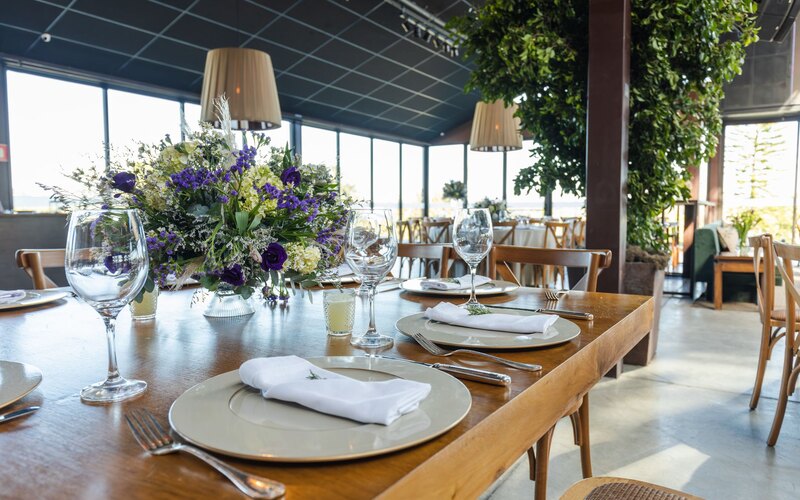
Mother's Day is the strangest day in the salon and restaurant calendar. For one Sunday you are heaving: fully booked tables, a stacked appointment book, family groups who only ever come out twice a year. Then Monday arrives and they are gone, and you have no way to reach a single one of them.
That is the whole problem in one sentence. The day prints money, but it builds nothing. You serve a room full of new faces and walk away with the same contact list you had last week. This guide fixes that. Book the day out early, sell vouchers and pamper packages before the rush, capture the crowd on your guest WiFi while they are in the room, then follow up so the daughter who treated her mum once becomes a regular who books her own appointment in April.
When Mother's Day actually lands
First, the date, because a surprising number of venues get caught out by it. UK Mother's Day is Mothering Sunday, and it is not a fixed date. It always falls on the fourth Sunday in Lent, three weeks before Easter Sunday, so because it is tied to the Easter calendar it moves every year (source: Wikipedia, "Mothering Sunday"). That is different from the US, where Mother's Day sits on the second Sunday of May, so do not copy American marketing calendars.
For planning, the two dates you need are Sunday 15 March 2026 and Sunday 7 March 2027 (sources: Wikipedia and Calendar-365.co.uk). Mark them now. The single biggest mistake venues make is starting to promote the day a fortnight out, by which point the people who plan ahead have already booked somewhere else.
Restaurant data backs up how big the day is. On the Tenzo platform, Mother's Day was the second busiest day of the year for gastropubs after Christmas, with sales up around 35 percent for fine dining and 27 percent for casual dining versus a typical weekend, and gastropubs and country inns up roughly 60 percent on the Sunday itself (source: Tenzo, Mother's Day guide). One day, that much extra trade. It is worth getting right.
The one-day problem
Here is what makes Mother's Day different from your normal week, and why the usual marketing instincts let you down.
The crowd is full of one-off visitors. A son booking a roast for his mum is not your regular Sunday diner. A husband buying his wife a cut and blow-dry as a treat is not on your client list. These are exactly the people you would love to keep, and exactly the people you currently have no way to contact once they pay and leave. The day is also driven by booking demand, not walk-ins, so the venue that captures the early bookings wins and the one that waits gets the leftovers.
Salons feel a second version of this. Your chairs are finite. You cannot serve more clients on the day than you have appointment slots, so the lever is not "fit more people in," it is "sell the slots earlier at a good price and turn those visitors into rebookings." A pamper package booked three weeks out is worth far more than a last-minute single cut, because it is planned, prepaid and brings a new face through the door.
Sell vouchers and packages in advance
The most underused Mother's Day tactic is selling the day before it happens. Gift vouchers and pre-booked packages do two things at once: they bring in cash early, and they let people who cannot get a table or an appointment still spend money with you.
For restaurants:
- Publish the set menu early. A fixed Mother's Day menu at a clear price makes booking a decision rather than a question. Put it on the splash page and in every email weeks out.
- Take deposits on bookings. Mother's Day is notorious for no-shows because plans are made for someone else. A small deposit per head cuts the empty tables that wreck the day's margin.
- Sell gift vouchers for the people who miss out. When you are fully booked, a "treat her another day" voucher captures the spend you would otherwise lose entirely.
For salons and spas:
- Build a named pamper package. A cut, treatment and a glass of fizz as one bookable thing is easier to gift than a list of individual services.
- Lead with gift vouchers. Most Mother's Day salon spend is one person buying for another. A voucher they can hand over on the day, redeemed any time, is the perfect product, and it spreads your bookings across weeks instead of cramming them into one Sunday.
- Cap the day, sell the week. Once Sunday is full, push appointments into the surrounding week. "Treat Mum to her own appointment, any day that suits her" sells the slots you actually have.
None of this works without a way to tell people. That is the part most venues are missing, and it is what guest WiFi quietly builds for you.
Capture the busy day on WiFi
Think about what the busy day gives you: a room full of people, sitting still, reaching for their phones. They want WiFi to share photos of the day, check messages and look something up. That is the moment to capture a contact, because the exchange is fair and obvious. They get free WiFi, you get an email with a marketing opt-in.
CaptiFi is a guest-WiFi marketing platform, not a hardware company. It layers a branded splash page, email capture and review automation on top of the network you already run. When a guest connects:
- They land on a branded splash page with your venue name and a warm Mother's Day welcome line.
- They enter their email and tick a marketing opt-in, kept separate from getting onto the WiFi, as UK GDPR and PECR require.
- They are online in seconds, and you have a new local subscriber who just chose to spend Mother's Day with you.
Venues using CaptiFi typically capture 40 to 60 percent of connecting guests as email subscribers, and a single venue typically adds 400-1,200 emails a month. Run that across your busiest day of the spring and you finish Mother's Day with a list of exactly the local people you most want back. It runs on the access points you already have (the verified list includes UniFi, TP-Link Omada, Cisco Meraki, Aruba, MikroTik, Ruckus, Fortinet, Cambium and DrayTek) or on an included plug-and-play device if you would rather not touch network settings.
The consent point matters and it is not optional. The marketing opt-in must be unbundled from WiFi access, so a guest can get online without subscribing. Our GDPR-compliant guest WiFi guide covers exactly how to set that up. Restaurants can also see how restaurants capture guest data with WiFi for the full mechanics.
A six-week timeline
Mother's Day rewards venues that plan backwards from the date. Here is a simple run, counting back from the Sunday. Adjust the calendar dates to 15 March in 2026 or 7 March in 2027.
| When | Restaurants | Salons and spas |
|---|---|---|
| 6 weeks before | Finalise the set menu and price. Open online bookings with a deposit. | Build and price the pamper package. Put gift vouchers on sale. |
| 4 weeks before | Email your list: "Book your Mother's Day table now, the set menu is live." One clear call to action. | Email your list: "Treat Mum. Vouchers and packages now available." Promote early. |
| 2 weeks before | Reminder email to non-bookers. Push the "fully booked soon, last few tables" line if true. | Push remaining Sunday slots, then the surrounding week. Promote vouchers for last-minute gifters. |
| The week of | Confirm bookings, take final deposits, brief the team. Update the splash page with a Mother's Day welcome. | Confirm appointments, prep the packages, update the splash page. |
| On the day | Capture every connecting guest on WiFi. Ask happy tables for a review at the right moment. | Capture clients at the chair. Book their next appointment before they leave. |
| The week after | Thank-you email with a reason to return: "Loved having you, here is what is on in April." | Rebooking nudge and a first-visit offer for new faces. Start the win-back clock. |
Because the date is fixed months out, you can schedule almost all of these emails in one sitting with automated marketing. The welcome email that goes out the moment someone subscribes is the workhorse here, and because it lands right after the visit it is opened far more often than a standard marketing send. Our welcome email sequence guide shows how to write it.
Turn one-off visitors into regulars
This is the part that separates a busy day from a profitable quarter. The Mother's Day crowd is full of people who would happily come back if you gave them a reason, but they will not remember to on their own. You have to reach out, and now you can, because you captured them on the day.
For restaurants, the follow-up is about a second visit. A thank-you email a day or two later, a reason to return in April (a quiz night, a new menu, an Easter Sunday roast), and a gentle nudge to anyone who has not been back. That win-back nudge is the quiet engine that turns one big day into ongoing trade.
For salons, the follow-up is rebooking. A client who came in for a Mother's Day treat is due again in six to eight weeks, and a well-timed reminder gets them back in the chair before they drift to the shop down the road. This is the entire retention playbook in our salon and barber client retention guide, and Mother's Day is simply the best day of the spring to feed new clients into it. Birthday offers work the same way: capture the date once, and the system sends the treat automatically.
The day itself is not the prize. The list you keep afterwards is. A fully booked Mother's Day that adds nothing to your contacts is a missed opportunity dressed up as a good day.
For the email side of this in detail, see guest email marketing: from WiFi login to loyal customer. If you run more than one site, the centralised dashboard lets you run the same Mother's Day playbook across every location at once.
Reviews while the goodwill is fresh
Mother's Day produces the happiest customers of your spring, and a happy customer is a five-star review waiting to be asked. The timing is everything: the moment after a great meal or a fresh cut is when people will gladly leave a review, and an hour later they have forgotten.
This is worth doing well, because reviews are one of the few things Google itself confirms as a local ranking input. Google states that local results are based on relevance, distance and prominence, and that prominence is partly based on reviews, with "more reviews and positive ratings" able to help your local ranking (source: Google Business Profile Help, "Tips to improve your local ranking on Google"). Recency matters to customers too: in GatherUp's "Beyond the Stars" survey, 45 percent of consumers said they pay the most attention to recent reviews. A burst of fresh Mother's Day reviews helps you on both fronts.
CaptiFi venues typically see 3 to 5 times more Google reviews within 60 days of switching on review automation, because the ask happens automatically at the right moment instead of relying on staff to remember. Our guide to automating Google reviews covers the timing.
Your Mother's Day checklist
- Diarise the date. 15 March 2026, 7 March 2027. It moves every year, so do not assume.
- Start six weeks out. Finalise the menu or package and put vouchers on sale early.
- Get guest WiFi live before the day, on your existing access points or an included plug-and-play device, with the marketing opt-in unbundled from access.
- Theme the splash page and schedule your run of emails in advance.
- Capture every guest on the day, and book salon clients in for their next appointment before they leave.
- Ask for reviews at the happy moment with review automation switched on.
- Follow up the week after with a thank-you, a reason to return, and a win-back for anyone who drifts.
Set this up once and Mother's Day stops being a single good Sunday and starts being the day your spring list grows. Start a 30-day free trial, or see the full playbook for CaptiFi for salons and CaptiFi for restaurants.
Sources cited inline (Tenzo, Google Business Profile Help, GatherUp, Wikipedia, Calendar-365). CaptiFi performance figures are typical ranges across venues, not guarantees. Details and dates are correct at the time of writing, June 2026.
Frequently asked questions
Quick answers to the most common questions about this topic.
When is Mother's Day in the UK in 2026 and 2027?
How busy is Mother's Day for UK restaurants?
How does guest WiFi help with Mother's Day marketing?
Should salons sell gift vouchers for Mother's Day?
How far in advance should I start Mother's Day marketing?
Is collecting WiFi sign-up emails GDPR compliant in the UK?
How do I turn one-off Mother's Day visitors into regulars?
What hardware do I need to run a Mother's Day WiFi campaign?
Does asking for reviews on Mother's Day actually help my Google ranking?
The CaptiFi Editorial Team writes about guest WiFi marketing, captive portals, GDPR-compliant data capture, and local SEO for venue operators. We base our recommendations on real customer outcomes and verified third-party reviews from G2.com.
Ready to turn your guest WiFi into a marketing engine?
CaptiFi captures customer data from every WiFi login, automates Google reviews and email follow-ups, and plugs into the tools you already use. Hardware included (refundable deposit), transparent pricing, 30-day free trial.